
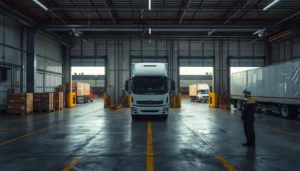
Warehouse Security Risks in Los Angeles
Every warehouse is different, but the security challenges are surprisingly similar across Los Angeles. Criminals usually don’t attack randomly. They look for predictable routines, weak access points, poor lighting, and facilities that lack visible security personnel.
One of the most common problems is after-hours trespassing. Warehouses often become quiet during evenings, weekends, or holidays. Criminals know that many businesses reduce staff during these hours, making it easier to enter the property unnoticed. Once inside, they may steal inventory, damage equipment, or simply scout the facility for a future burglary.
Another major concern is organized cargo theft. Unlike small-scale theft, organized groups carefully study warehouse operations. They may monitor delivery schedules, employee routines, loading dock procedures, and even truck departure times before carrying out a theft. In Los Angeles, where thousands of trucks move goods every day, cargo theft has become one of the fastest-growing security risks.
Internal theft is another issue many warehouse owners underestimate. While most employees are trustworthy, businesses occasionally experience inventory loss caused by workers, temporary staff, or contractors with authorized access. Without proper supervision, access control, and security monitoring, these incidents may continue for months before anyone notices.
Vandalism is also a costly problem. Graffiti, broken windows, damaged vehicles, and destroyed fencing create unnecessary repair expenses while sending the wrong message to customers and employees. Properties that appear neglected often become repeated targets because criminals believe security is weak.
Last Article


Why Los Angeles Warehouses Are High-Value Targets
Los Angeles is one of the busiest logistics hubs in the United States. Warehouses receive products from the Port of Los Angeles, the Port of Long Beach, airports, rail yards, and distribution centers before goods are shipped across California and the rest of the country.
This constant movement of merchandise makes warehouses attractive to criminals.
Electronics, medical equipment, clothing, automotive parts, food products, pharmaceuticals, and construction materials can all be resold quickly on the black market. Criminals don’t necessarily need to steal an entire truckload. Even a few pallets of high-value inventory can represent tens of thousands of dollars in losses.
Large warehouse facilities also present another challenge.
Many buildings cover hundreds of thousands of square feet, making it impossible for managers to monitor every entrance, loading dock, storage aisle, parking area, or perimeter fence without professional security support.
Security guards provide something technology alone cannot.
They observe suspicious behavior, verify identities, respond immediately to emergencies, document incidents, and interact directly with employees, visitors, truck drivers, and law enforcement when necessary.

The Hidden Cost of Poor Warehouse Security
Many business owners focus only on the value of stolen inventory.
In reality, theft is often the smallest financial loss.
Poor warehouse security can lead to interrupted operations, delayed shipments, damaged customer relationships, insurance claims, higher insurance premiums, legal liability, employee safety concerns, and expensive equipment replacement.
Imagine a distribution center scheduled to deliver products to dozens of retail stores.
A single overnight break-in damages loading equipment and steals several pallets waiting for delivery.
The company now faces delayed shipments, unhappy customers, overtime expenses, replacement inventory, police investigations, insurance paperwork, and possible contract penalties.
One security incident can affect business operations for weeks.
Professional warehouse security helps reduce these risks before they become expensive problems.
Warning Signs That Your Warehouse Needs Better Security
Many property managers wait until something goes wrong before improving security.
Unfortunately, by then the damage has already been done.
You should consider upgrading warehouse security if you notice any of the following warning signs:
- Employees reporting suspicious vehicles outside the
- property.
- Missing inventory without clear explanations.
- Broken fencing or damaged perimeter gates.
- Poor lighting around parking lots or loading docks.
- Unauthorized visitors entering the property.
- Increasing vandalism.
- Repeated false alarms.
- Delivery trucks arriving outside scheduled hours.
- Lack of visitor identification procedures.
- Limited surveillance coverage around blind spots.
Ignoring these warning signs often allows criminals to become more confident and learn more here.
Professional security officers identify these vulnerabilities early and recommend practical solutions before they become major incidents.
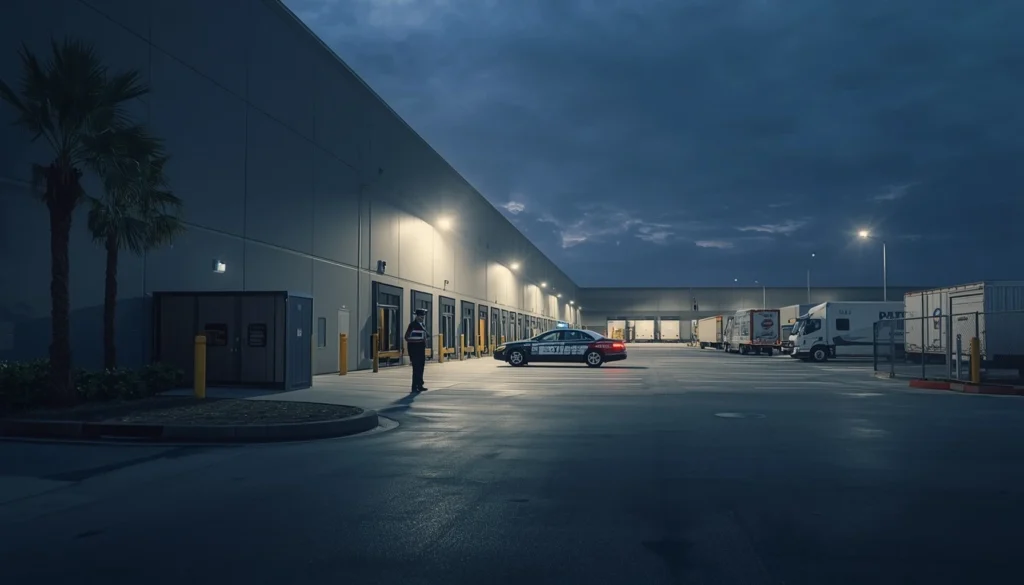

How Professional Warehouse Security Guards Reduce Risk
Professional security guards do much more than stand at the front gate.
A comprehensive warehouse security strategy combines prevention, observation, communication, and rapid response.
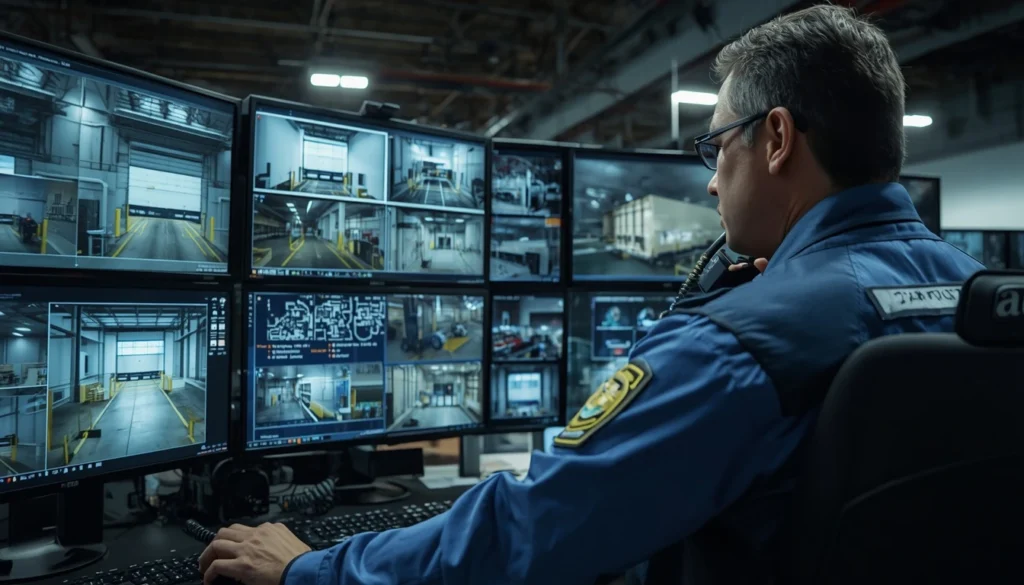
Security officers regularly patrol the property, monitor loading docks, inspect gates, verify employee credentials, record visitor information, check alarm systems, observe surveillance cameras, and respond immediately to suspicious activity.
Learn more about our Warehouse Security Guard Services in Los Angeles for complete warehouse protection.
Visible security alone discourages many criminals.
Most thieves prefer easy targets.
When they see trained security officers conducting patrols, checking vehicles, and monitoring access points, they often choose another location instead.
Security guards also become familiar with normal daily operations.
This allows them to recognize unusual behavior much faster than automated systems.
For example, a truck arriving outside normal business hours or an unfamiliar individual attempting to access restricted areas immediately attracts attention.
Quick intervention often prevents theft before it occurs.
Technology Alone Isn't Enough
Modern warehouses invest heavily in surveillance cameras, alarm systems, access control technology, motion detectors, and smart monitoring software.
These tools are valuable.
However, they cannot replace trained professionals.
A camera records an incident.
A security guard stops it.
An alarm notifies someone after unauthorized access occurs.
A security officer may prevent that access entirely.
Technology works best when combined with experienced warehouse security personnel who know how to interpret situations, respond appropriately, and coordinate with emergency services when necessary.
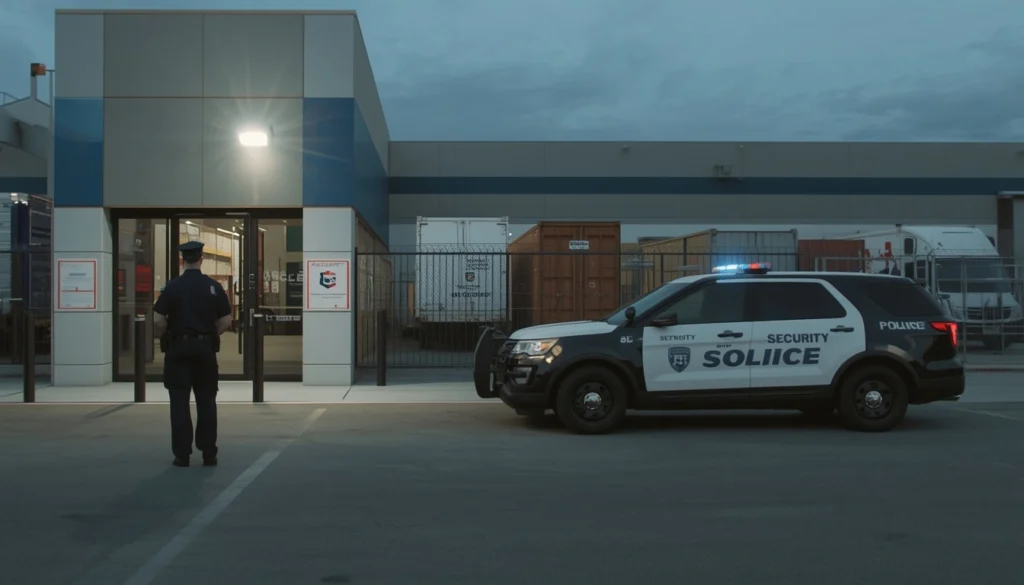
Vehicle Patrols vs Static Security Guards
Warehouse owners often ask whether they need stationary guards or vehicle patrol officers.
The answer depends on the size of the property.
Smaller warehouses may benefit from one dedicated on-site security officer responsible for access control and visitor management.
Larger warehouse complexes often require vehicle patrol services in addition to fixed guards.
Vehicle patrol officers inspect perimeter fencing, parking lots, loading areas, employee entrances, emergency exits, and remote sections of the property much faster than guards on foot.
For many facilities, combining both services provides the highest level of protection while maintaining cost efficiency.
Real-World Warehouse Security Scenarios in Los Angeles
Warehouse security is not just about preventing theft. Every day, businesses across Los Angeles face situations that can interrupt operations, damage customer trust, and result in significant financial losses. Understanding these real-world risks helps business owners make better security decisions before problems occur.
Scenario 1: Overnight Cargo Theft
A distribution warehouse receives several truckloads of consumer electronics every Friday afternoon. Because weekend staffing is limited, criminals monitor the facility for several days and discover that only surveillance cameras protect the loading dock after business hours.
Late Saturday night, thieves cut through a section of the perimeter fence and load valuable merchandise into a waiting truck. By Monday morning, inventory worth hundreds of thousands of dollars has disappeared.
A professional warehouse security team could have prevented this incident through regular vehicle patrols, perimeter inspections, and immediate response to suspicious activity.
Scenario 2: Unauthorized Visitor Access
A delivery driver enters a warehouse during a busy morning without proper identification.
Employees assume someone else has already verified the visitor.
The individual spends nearly twenty minutes inside restricted storage areas before leaving with confidential shipping information.
Professional security guards verify every visitor, maintain entry logs, issue temporary identification badges, and ensure visitors remain in authorized areas at all times.
Scenario 3: Employee Theft
Inventory reports begin showing small discrepancies every month.
Management initially believes the losses are simple accounting errors.
After several months, security officers identify an employee removing products through an emergency exit after shifts end.
Without trained security personnel monitoring employee activity and conducting routine patrols, this type of theft often continues unnoticed for long periods.
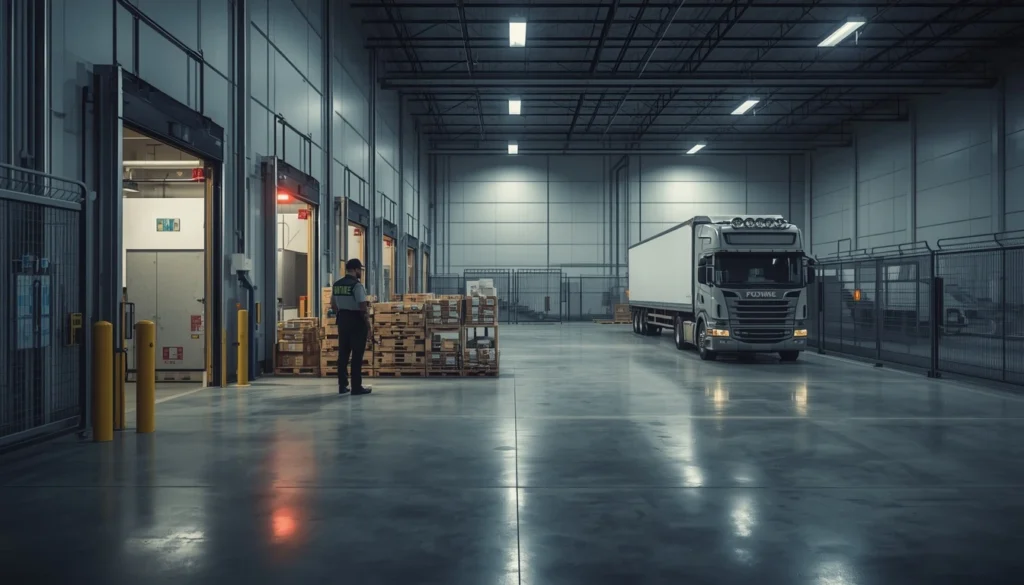
Warehouse Security Best Practices
Protecting a warehouse requires much more than hiring one security guard. The most effective facilities combine trained personnel, modern technology, and well-defined procedures.
Some of the most effective security practices include:
• Maintaining controlled access points.
• Requiring visitor registration.
• Conducting scheduled and random security patrols.
• Installing high-quality surveillance cameras.
• Keeping parking lots and loading docks well lit.
• Inspecting perimeter fencing regularly.
• Monitoring delivery schedules carefully.
• Verifying driver identities before loading cargo.
• Training employees to report suspicious behavior immediately.
• Reviewing security procedures every few months.
Businesses that consistently follow these practices significantly reduce the likelihood of theft, vandalism, and unauthorized access.
How to Choose the Right Warehouse Security Company
Not every security company has experience protecting warehouse facilities.
Before hiring a provider, ask the following questions:
- Are the security officers licensed and properly trained?
- Do they have experience protecting warehouses and distribution centers?
- Can they provide both static guards and vehicle patrol services?
- Are incident reports provided after every shift?
- Can they customize security plans for different warehouse sizes?
- Do supervisors inspect security officers regularly?
- Are guards trained to handle emergencies and coordinate with law enforcement?
- Is 24/7 coverage available when needed?
Choosing a company based only on price often leads to poor service. A reliable security provider focuses on prevention, communication, professionalism, and rapid response rather than simply placing a guard at the entrance.
Why Investing in Warehouse Security Saves Money
Many businesses see security as an operating expense.
In reality, professional warehouse security is an investment that helps reduce much larger financial risks.
Preventing one major cargo theft may save hundreds of thousands of dollars.
Avoiding a single workplace injury caused by unauthorized visitors can eliminate expensive legal claims.
Reducing vandalism lowers maintenance costs.
Protecting inventory improves customer satisfaction because deliveries remain on schedule.
Lower incident rates may also help reduce insurance premiums over time.
Instead of reacting to security incidents after they occur, successful warehouse operators focus on prevention.
Warehouse Security Risk Assessment Checklist
Before assuming your warehouse is secure, review the following checklist.
Loading Dock Security
- Are deliveries scheduled and documented?
- Are truck drivers verified?
- Are loading activities monitored?
Access Control
- Are visitors required to sign in?
- Are employee ID badges verified?
- Are restricted areas clearly marked?
Perimeter Security
- Is the fence free from damage?
- Are all gates locked when not in use?
- Is exterior lighting adequate?
Security Personnel
- Are guards conducting regular patrols?
- Are incident reports completed?
- Are emergency procedures practiced regularly?
If you answered “No” to several of these questions, your warehouse may have vulnerabilities that should be addressed before they become costly security incidents.
Surveillance
- Do cameras cover all entrances?
- Are blind spots minimized?
- Are recordings stored securely?
Conclusion
Warehouse security is no longer optional for businesses operating in Los Angeles. As cargo theft, unauthorized access, employee theft, and vandalism continue to challenge warehouse operators, relying solely on cameras or alarm systems is rarely enough.
A professional security strategy combines experienced security guards, mobile patrol services, access control, surveillance, and proactive risk management to create a safer working environment while protecting valuable inventory and business operations.
Every warehouse has unique risks. The right security solution begins with understanding those risks and implementing preventive measures before incidents occur.